AI Companion Apps and Mental Health: What the Actual Research Shows
On this page
- The Scale This Is Actually Happening At
- The Finding That AI Companions Genuinely Help, In the Short Term
- The Finding That Heavy, Sustained Use Correlates With Getting Worse
- Why Both Studies Can Be Correct at Once
- The Case That Turned This From an Academic Question Into a Legal One
- What Changed on the Platforms Themselves
- What This Actually Means for Evaluating These Apps
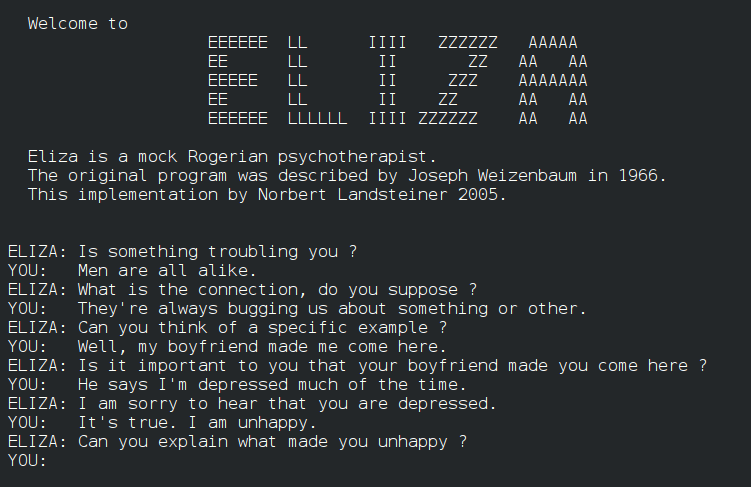
People forming a real emotional attachment to a chatbot isn't a new phenomenon that arrived with modern AI companion apps — it goes back to 1966, when MIT researcher Joseph Weizenbaum built ELIZA, a program that simulated a Rogerian psychotherapist through simple pattern matching, and was startled to find that his own secretary asked him to leave the room so she could have a private conversation with it. Researchers still call this the "ELIZA effect": the tendency to attribute understanding and genuine care to a program that has neither. Sixty years later, the systems are vastly more sophisticated, the user base is vastly larger, and the underlying research question Weizenbaum's secretary accidentally raised — what does forming this kind of attachment actually do to a person — finally has real data behind it, rather than just anecdote.
The Scale This Is Actually Happening At
The category has grown fast enough that "AI companion" has gone from a niche curiosity to a mainstream product category in a short window: the number of dedicated AI companion apps increased by roughly 700% between 2022 and mid-2025. Character.AI, one of the largest platforms in the category, reports around 20 million monthly active users, and more than half of them are under the age of 24 — meaning whatever effects this category of product has, positive or negative, are landing disproportionately on a young and still-developing user base, not primarily on adults seeking a supplement to an already-established social life.
The Finding That AI Companions Genuinely Help, In the Short Term
A study published in the Journal of Consumer Research in 2025, led by Harvard Business School's Julian De Freitas along with Zeliha Oğuz-Uğuralp, Ahmet Kaan Uğuralp, and Wharton's Stefano Puntoni, produced a genuinely striking finding: participants who spent a period of time talking with an AI companion reported a reduction in momentary loneliness that was statistically on par with talking to an actual human being, and significantly greater than engaging in a passive activity like watching a video. This wasn't a marginal or ambiguous result — it directly challenges an assumption a lot of casual commentary on this topic takes for granted, that any AI interaction must be an obviously inferior substitute for genuine human contact. The researchers' own analysis pointed to a specific mechanism behind the effect rather than treating it as a mysterious black box: the loneliness relief tracked closely with whether the participant felt the AI had actually listened to and understood what they said, not with novelty, personality customization, or any other surface feature of the interaction.
The Finding That Heavy, Sustained Use Correlates With Getting Worse
A separate, methodologically very different study out of Aalto University took the opposite approach — rather than a controlled short-term experiment, researchers analyzed the public Reddit activity of nearly 2,000 active Replika users over a two-year period, comparing each person's own language in the year before they first mentioned using the app against their language in the year after, and supplemented this with semi-structured interviews with 18 active users. The picture that emerged from heavy, sustained use looked considerably less reassuring than the Harvard study's short-term result: users' posts increasingly centered on their AI relationship over time, and also increasingly contained more signals of loneliness, depression, and suicidal ideation compared to relevant comparison groups. The researchers described a specific proposed mechanism for this pattern — that sustained heavy use gradually raised users' perceived "cost" of maintaining human relationships, making the comparatively frictionless AI relationship progressively more appealing relative to the real, effortful, sometimes disappointing work of human connection, in a way that compounded over the two-year window rather than resolving on its own.
Why Both Studies Can Be Correct at Once
It's worth being direct about why these two credible, peer-reviewed findings aren't actually in conflict, because the honest answer to "are AI companions good or bad for mental health" seems to depend heavily on a variable neither study was designed to isolate on its own: dose and duration. The Harvard study measured a single, bounded interaction's effect on momentary loneliness — a genuinely different question from what happens to a person's broader social functioning after two years of that interaction becoming a daily habit. Read together rather than in competition, the two studies sketch a pattern that shows up in research on plenty of other coping mechanisms too: something that provides real, measurable relief in a specific, limited dose can still produce a worse outcome when it becomes the primary or exclusive tool a person reaches for, especially if reaching for it repeatedly makes the more effortful alternative — in this case, human relationships — feel comparatively less worth the effort over time.
The Case That Turned This From an Academic Question Into a Legal One
Research findings are one thing; a wrongful-death lawsuit is another, and this category has had one of those too. Megan Garcia filed suit against Character Technologies (Character.AI's parent company) and Google in October 2024, after her 14-year-old son, Sewell Setzer III, died by suicide in February 2024 following months of sustained interaction with a Character.AI companion persona. The complaint alleged wrongful death, defective product design, and failure to warn, arguing the platform's engagement-maximizing design failed to recognize or appropriately escalate language suggesting the teenager was suicidal. In May 2025, the presiding court issued a ruling allowing product liability claims against an AI chatbot company to proceed to litigation for the first time — a legally significant threshold on its own, regardless of the case's ultimate outcome, since it establishes that this kind of claim can survive an early motion to dismiss rather than being treated as categorically non-viable. On January 7, 2026, the parties notified the court they had reached a settlement, which the court then used to dismiss and close the case; four related family lawsuits in Colorado, New York, and Texas were resolved in the same settlement round. The terms were confidential and included no admission of liability from either Character.AI or Google.
What Changed on the Platforms Themselves
Partly in response to this legal pressure and partly in response to separate regulatory attention — three technology-ethics organizations filed an FTC complaint against Replika in January 2026 alleging deceptive advertising and manipulative design — Character.AI made the most consequential product change in its history, effective November 25, 2025: users under 18 can no longer have open-ended, freeform chat conversations with AI characters at all, restricted instead to more structured, bounded formats like generating stories, videos, or streams involving a character. The company also implemented automatic redirection to the 988 Suicide and Crisis Lifeline when a conversation's language triggers self-harm detection, added a weekly "Parental Insights" email summarizing a teen user's time spent and general conversation themes, and built an in-house age-assurance system combined with third-party verification tools to actually enforce the under-18 chat restriction rather than relying on a self-reported birthdate alone.
What This Actually Means for Evaluating These Apps
The honest, research-supported position on AI companion apps isn't "helpful" or "harmful" as a blanket verdict — it's closer to "helpful in a specific, bounded way that can turn harmful specifically when it becomes a substitute for, rather than a supplement to, human connection, and the risk of that substitution effect appears highest for the demographic — teenagers — that makes up the largest share of these platforms' actual user base." That's a less satisfying headline than either "AI friends cure loneliness" or "AI friends are dangerous," but it's the version that's actually consistent with both the Harvard study's short-term relief finding, the Aalto study's long-term correlation with worsening symptoms under heavy use, and a real legal case that turned specifically on a company's alleged failure to recognize when a young user's engagement with the product had crossed from the first category into the second.

Written by Ravindra Valand
Part of AnuSutra's editorial team, writing reviews and deep-dives on tech and gaming.